Monetization
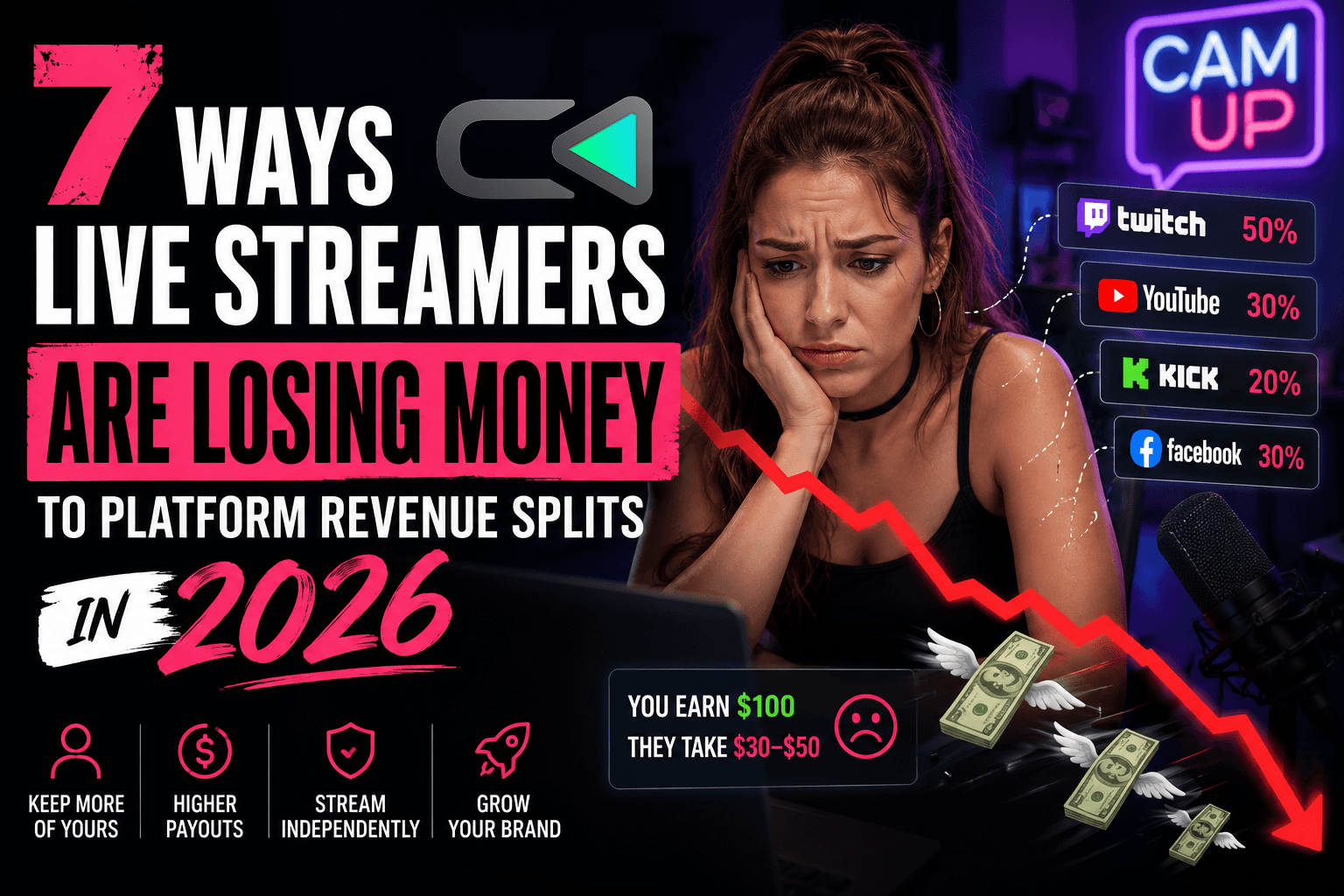
7 Ways Live Streamers Are Losing Money to Platform Revenue Splits in 2026
You put in hours building your show, growing your chat, keeping your audience coming back. Then the payout hits and you do the math. The number is smaller than it should be, again.
The Cut You Never Agreed To
Platform revenue splits are the most normalized way money leaves your pocket in this industry. Everyone knows they exist. Most creators just absorb them as the cost of doing business. But in 2026, with more streamers broadcasting across multiple platforms at once, those cuts don't just add up — they compound.
Here are seven specific ways platform revenue splits are draining your income right now.
1. The Base Revenue Split Is Just the Starting Point
Every major platform takes a cut of what your fans spend on you. Twitch's standard split for non-Partner streamers is 50/50 on subscriptions. YouTube takes 30% of Super Chat and channel membership revenue. TikTok's gift-to-diamond conversion means creators often net well under half of what fans actually spend.
These base splits feel like the deal. They're not. They're the floor — everything else stacks on top.
The real problem isn't just the percentage. It's that you have no negotiating power and no real visibility into what your fans are actually spending in full.
2. Gifting Fees Stack on Top of the Split
On TikTok, fans buy coins with real money, convert those coins to gifts, and you receive diamonds that you then cash out. By the time that money reaches you, the effective take rate is often 50% or more — not the headline number the platform advertises.
Instagram's Badges and Twitch's Bits work the same way. Fans spend more than you receive. That gap is the platform's margin, baked into every transaction your fans make to support you.
When a fan drops $10 on a gift, you might see $4. That's not a processing fee. That's a structural tax on your relationship with your audience.
3. Payout Delays Cost You Real Money
Most platforms pay on a 30 to 60-day delay, and some won't release anything until you hit a minimum threshold. Revenue from a big stream in early May might not land in your account until July.
For creators managing income month to month, that's a real cash flow problem. You can't reinvest in your setup, pay collaborators, or cover production costs on money that's sitting in a platform's account for two months.
There's another cost too: delayed payouts make it harder to understand what's actually working. If you can't connect a specific stream to a specific payout, you're guessing at what formats and moments actually convert.
4. You're Building an Audience You Don't Own
This one doesn't show up as a line item, but it costs more than any percentage split.
Every follower, subscriber, and fan you build on a platform belongs to that platform. You can't export your Twitch subscriber list. You can't contact your TikTok followers directly. If a platform shifts its algorithm, suspends your account, or kills a monetization feature, your relationship with those fans is entirely at the platform's discretion.
You did the work to earn that trust. The platform owns the contact information. That's a bad deal — and most creators don't realize how bad until something breaks.
5. Multi-Platform Streaming Means Multiple Splits
Streaming on two or three platforms simultaneously — which more creators do every year — doesn't double or triple your revenue. You're splitting your attention and still paying each platform's cut on whatever you earn there.
On top of that, your fans are fragmented. The ones on Twitch don't see the gifting happening on TikTok. The ones on YouTube aren't in your Kick chat. You're running the same show across four platforms and getting taxed four times, but each audience is stuck in its own silo.
Multi-platform reach is real. But without a unified monetization layer on top, you're doing more work and still playing by each platform's math.
6. Algorithm Changes Can Wipe Out Your Revenue Overnight
Platform revenue isn't just split — it's conditional. Your income depends on the algorithm surfacing your streams, the platform keeping its monetization features intact, and the payout structure staying the same.
All three have shifted on streamers in recent years. TikTok has adjusted gift payout rates. Twitch changed its subscription split and faced massive creator backlash. YouTube has modified how Super Chats surface in feeds.
When your entire revenue model runs through one platform, a single policy update can cut your income without warning. Most businesses wouldn't accept that kind of exposure. Streamers accept it by default.
7. Your Best Revenue Moments Go Unmonetized
The highest-energy moments in a live stream — a big reaction, a challenge, a guest drop, a community milestone — are exactly when your audience is most ready to spend. Most platforms give you one or two tools to capture that energy: gifting and subscriptions.
That's it. No merch drop timed to the moment. No paid video chat where a fan can jump on camera with you. No interactive format that turns the moment into a transaction.
You're not leaving money on the table because your audience doesn't want to spend. You're leaving it there because platform monetization tools are built for the platform's business model, not yours.
What Doing Something About It Looks Like
The answer isn't to leave your platforms. Your audience is there — that's not changing. The answer is to add a monetization layer that sits on top of your existing streams and works across all of them at once.
That's exactly what CamUp is built for. Video chat, gifting, merch drops, and interactive features — all layered directly into your live show without changing how you stream. One Creator Link works across YouTube, TikTok, Twitch, Instagram, and Kick. Fans stay on their preferred platform. You get paid directly, no platform cut, and you keep your audience data.
It's the difference between building on rented land and building something you actually own.
If you're streaming seriously in 2026, the platform split math doesn't get better by waiting. Apply for the creator beta at
FAQs
What is a platform revenue split for streamers?
It's the percentage of fan spending a platform keeps before paying you. Twitch takes 50% of subscription revenue for most streamers. TikTok's coin-to-diamond conversion means creators often receive less than half of what fans spend on gifts. The headline number rarely tells the full story.
How much do platforms take from live stream gifting?
Effective take rates are often 50% or higher once you factor in coin purchase rates, conversion fees, and payout structures. What platforms advertise and what creators actually net are usually two different numbers.
Can I avoid platform revenue splits without leaving my platforms?
Yes. Tools that sit on top of your existing streams let you add direct monetization without moving your audience anywhere. CamUp adds gifting, video chat, and merch drops to your live show and pays you directly — no platform cut involved.
Why do payout delays matter for streamers?
Most platforms pay 30 to 60 days after revenue is earned, sometimes with minimum thresholds on top of that. That creates real cash flow gaps and makes it harder to know which streams and formats are actually driving income.
What does audience data ownership mean for live streamers?
When you build followers on a platform, the platform controls that relationship. You can't export contact info or reach fans directly if the rules change. Owning your audience data means you have a direct line to your fans that no algorithm update or policy shift can take away.
How does multi-platform streaming affect revenue splits?
Each platform applies its own split to whatever you earn there. Without a unified monetization layer, streaming on multiple platforms means more work but the same fragmented, per-platform cut math on every dollar.
What's the biggest missed revenue opportunity in live streaming?
High-energy live moments — reactions, challenges, milestones — are when audiences are most willing to spend, but most platforms only offer basic gifting and subscriptions to capture it. Timed merch drops, paid fan video chat, and interactive formats can turn those moments into real revenue. Platform-native tools just aren't built for that.